

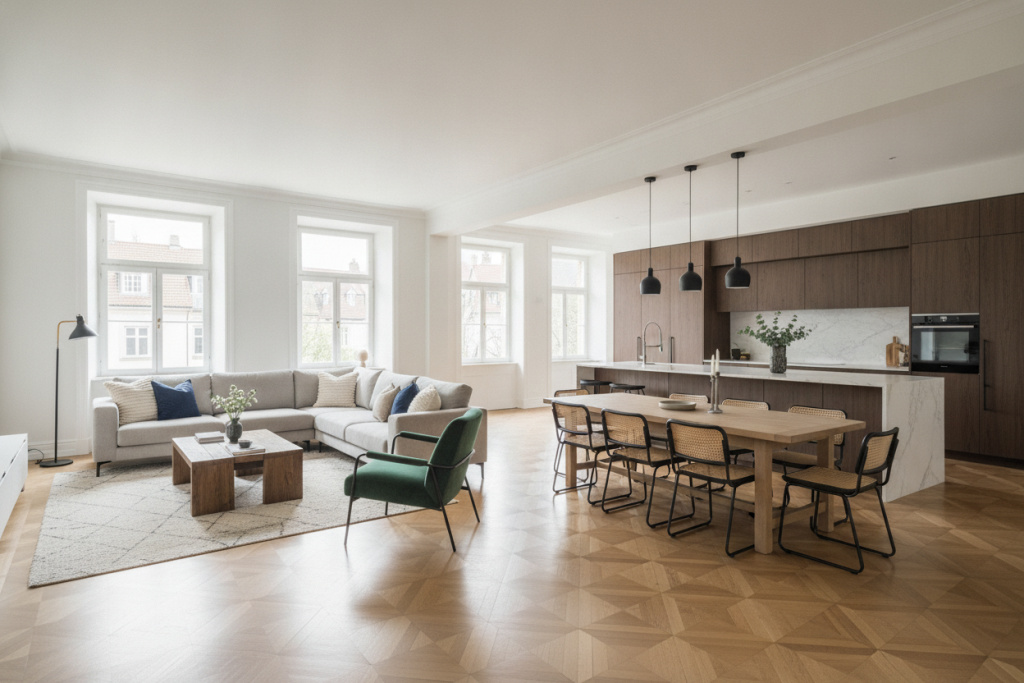
A property can photograph like a seven-figure home and still be a mediocre investment. The features that genuinely hold value tend to be the ones that are expensive to fake: solid materials, sensible layouts, decent plumbing, glazing that works, and an energy performance that will not become a problem in a few years’ time.
Knowing which property investment features are worth paying a premium for, and which are surface dressing, is what separates a good buy from an expensive lesson.
Key Takeaways
Solid materials, sensible layouts, working glazing and strong energy performance matter more than cosmetic finishes.
Privately rented homes in England and Wales must reach EPC band C by 1 October 2030.
Test the water pressure at every viewing — a weak system is a several-thousand-pound fix.
Smart home tech only adds value if the kit is mainstream and replaceable.
Ceiling height, fireplaces, bay windows and cornicing cannot be added later.
A RICS Level 3 survey on older properties usually pays for itself several times over.
1. Materials That Hold Up Over Time
Check what your hand touches. Solid or engineered oak flooring. Real stone or quartz worktops. Solid internal doors and plaster cornicing. These mark, get repaired and carry on. Laminate, MDF and vinyl simply wear out, which is why material quality matters for resale value.
Decorative plaster is another marker. Venetian, Marmorino and clay finishes use natural materials and cannot be faked with paint. Evoke Polished Plastering works with clay plasters made from pure sands, clays and fibres coloured with mineral pigments; non-toxic and durable rather than a surface effect.
Two quick tests tell you most of what you need to know. Tap an internal door: a hollow thud means a hollow-core door, and the rest of the specification is probably entry level too. Then open a few kitchen drawers. Soft-close runners and dovetailed carcasses are expensive; cheap chipboard units cannot hide what they are.
2. A Kitchen Designed Around Use
Appliance badges are the easiest thing in a house to buy. What is much harder, and much more valuable, is a kitchen with a workable layout: worktop either side of the hob, a sink that is not wedged into a corner, and enough circulation space for two people to pass each other.
Look for proper extraction ducted to an outside wall rather than a recirculating filter, because that single detail tells you whether the kitchen was installed by someone who knew what they were doing. Integrated Miele, Neff or Siemens appliances, a Quooker-style boiling tap and a pantry or utility room all add appeal for tenants and luxury listings that sell. Just remember appliances depreciate; the layout and the cabinetry do not.
3. Bathrooms With Water Pressure to Match
Turn the shower on. A large rainfall head fed by a tired gravity system produces a disappointing trickle, and fixing that means an unvented cylinder or a pump, plus the airing cupboard space to house it. That is a several-thousand-pound job hiding behind a very photogenic bathroom.
Fully tiled walls, a tanked wet room, underfloor heating and a second bathroom or en suite all read as genuine quality. Signs of water damage, flexible sealant patched over cracked grout, or a ceiling stain in the room below the bathroom point the other way entirely.
4. Windows, Glazing and the Cost of Getting Them Wrong
Windows are where cosmetic luxury and real quality diverge most sharply. Slim-profile double glazing in timber sashes, aluminium or Crittall-style steel frames, and roof lanterns that bring light into the middle of a floorplan are all costly to install and immediately noticeable to buyers.
Check every unit for misting between the panes, which means failed seals, and check whether the frames are original timber in need of repair or replacement. On a period property in a conservation area, or anything listed, replacement may not even be permitted in the form you would like, so establish what consents apply before you budget for it.
5. The EPC C Deadline: Buy Smart or Retrofit Under Pressure
This one is no longer optional. Privately rented homes in England and Wales must reach EPC band C by 2030. Roughly half of private rented stock sits below that today. That is a lot of landlords chasing the same trades at the same time.
Buy a poor performer and you retrofit under deadline pressure. Prices rise. Availability drops. Buy a strong performer and you skip the queue entirely.
So ask specific questions at the viewing. Solar panels. Heat pump. Loft and wall insulation. MVHR. Get installation dates and any warranties in writing.
Then get a number. A qualified assessor or surveyor can tell you what this particular property needs to reach band C and what it will cost. Do that before you make an offer, not after. That figure belongs in your price.
6. Smart Technology That Outlives the Installer
Smart heating, zoned lighting, integrated audio and hard-wired ethernet can all add genuine appeal, particularly in the higher-value rental market. The question to ask is who can maintain it. Heavily proprietary systems, or bespoke installations set up by a contractor who is no longer contactable, can leave you with a house full of hardware nobody can reprogramme.
Mainstream, replaceable kit tends to be the safer bet in an investment property: recognised heating controls, a decent router position, a wired EV charge point with the right electrical capacity behind it, and video entry that a tenant can actually use. Ask for app logins and manuals at exchange, not after completion.
7. Outdoor Space, Parking and Architectural Character
Outdoor space carries weight, but usable outdoor space carries more. Orientation, level access from the living space, proper drainage, a garden room with power and lighting, and secure off-street parking all shift how a property performs. A steeply sloping, north-facing strip of grass photographs fine and does very little.
Then there is character you could not replicate at any price: ceiling height, original fireplaces, bay windows, cornicing, staircases, wide hallways, a genuinely impressive elevation. These distinctive details are a large part of why prime period stock keeps its pricing, and they cannot be added later to a property that never had them.
Cosmetic Luxury and Genuine Quality Are Not the Same Thing
Sometimes the expensive finishes are there to stop you looking further. Paint over damp. New flooring over a bad subfloor. A designer kitchen on a 1970s consumer unit. It all presents beautifully in twenty minutes.
The dull checks protect the investment. Boiler age. Electrical condition. Roof and flashing. EPC data. Planning and building regulations sign-off for any extension or loft conversion. A RICS Level 3 survey usually pays for itself several times over.
And no feature guarantees a return. It depends on location, local market and property type. The question is never whether a house looks expensive.
FAQs
How Do I Check Whether an Extension or Loft Conversion Was Done Legally?
Search the address on the local authority’s online planning portal, which will show any applications, approvals and conditions attached to the property. Then ask the vendor’s solicitor for building regulations completion certificates, or a lawful development certificate if the work was done under permitted development rights. Indemnity insurance is sometimes offered as a substitute, but it only covers enforcement action — it does not confirm the work was built correctly.
Do Features Like Heat Pumps or Smart Systems Increase a Mortgage Valuation?
Usually not directly, because surveyors value against recent comparable sales in the immediate area rather than pricing individual upgrades. Premium features tend to influence how quickly a property sells and to whom, rather than the figure a valuer puts on the report. Some lenders do offer green mortgage products tied to EPC banding, which is a separate benefit worth asking a broker about.
How Do I Judge Whether a Garden Has Development or Improvement Potential?
Check the orientation with a compass app on your phone, then look at the title plan to confirm where the legal boundaries actually sit. Practically, the things that determine what you can do are side or rear access wide enough for machinery and materials, ground conditions and drainage, and proximity to boundaries if you are considering a garden room or outbuilding.